


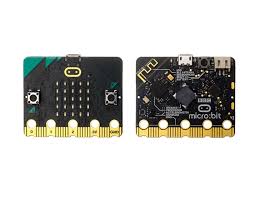
Description
The BBC micro:bit is an easy-to-use, pocket-sized programmable microcontroller designed to inspire creativity and learning in coding, robotics, and electronics. Created by the BBC for education, it allows students, hobbyists, and makers to design interactive projects using simple drag-and-drop coding or advanced programming in Python, JavaScript, or C++.
Features
- Built-in 25 red LED matrix for visual output
- Two programmable buttons for user input
- Motion detection with accelerometer and compass sensors
- Bluetooth Low Energy (BLE) for wireless communication
- Temperature sensor, light sensor, and microphone (on V2)
- Edge connector for connecting external components and sensors
- USB and battery power options
- Supported by beginner-friendly coding platforms like MakeCode and Mu Editor
Specifications
- Processor: 32-bit ARM Cortex-M0 (V1) / ARM Cortex-M4 (V2)
- Flash Memory: 256 KB
- RAM: 16 KB (V1) / 128 KB (V2)
- Connectivity: Bluetooth, USB
- Power Supply: 3V (battery) or 5V (USB)
- Dimensions: 52mm x 42mm
- Programming Languages: MakeCode, MicroPython, JavaScript, Scratch, and C++
Applications
- Coding and programming education
- Robotics and automation projects
- Interactive wearable technology
- Smart home and IoT experiments
- STEM classroom projects and competitions
Why Choose the micro:bit
Fun, intuitive, and educational — the BBC micro:bit makes learning programming and electronics simple and engaging for all ages. Its wide range of built-in sensors and wireless features make it perfect for students, teachers, and hobbyists exploring the world of STEM and IoT.


Reviews
There are no reviews yet.